Your Genome Isn't 90% Garbage — That's Just What Scientists Called the Parts They Didn't Understand Yet
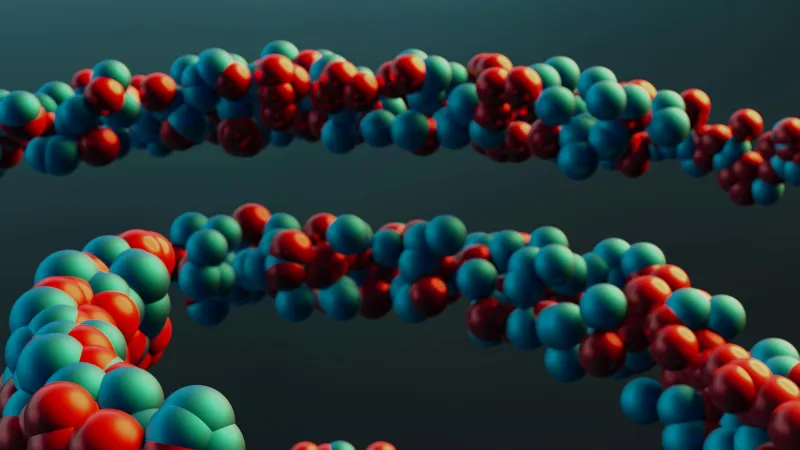
Walk into any high school biology class in the 1990s, and you'd hear a startling claim: roughly 90% of human DNA serves no purpose whatsoever. Teachers called it "junk DNA" — evolutionary leftovers cluttering up our chromosomes like old files on a computer hard drive.
This wasn't fringe science. Major textbooks repeated the claim. Popular science magazines ran with it. The idea even made its way into cocktail party conversations, where people would marvel at how wasteful evolution apparently was.
There's just one problem: it was spectacularly wrong.
The Birth of a Scientific Myth
The junk DNA concept emerged in the 1970s, when molecular biologist Susumu Ohno coined the term to describe vast stretches of genetic material that didn't seem to code for proteins. At the time, scientists understood DNA primarily as a blueprint for making proteins — the workhorses of cellular function.
 Photo: Susumu Ohno, via www.maeramat.com
When researchers discovered that only about 2% of human DNA directly codes for proteins, a logical assumption followed: the other 98% must be evolutionary debris. Random mutations, viral insertions, and duplicated genes that had outlived their usefulness.
The math seemed to support this theory. If humans needed roughly 20,000-25,000 protein-coding genes to function, and those genes represented such a tiny fraction of our genome, what else could all that extra DNA be doing?
"We were looking at the genome through a very narrow lens," explains Dr. Sarah Chen, a genomicist at Stanford University. "We assumed that if DNA didn't make proteins, it didn't matter. That's like assuming that if a sentence doesn't contain nouns, it has no meaning."
 Photo: Stanford University, via cdn.britannica.com
The ENCODE Project Changes Everything
The junk DNA myth began crumbling in earnest around 2003, when the ENCODE (Encyclopedia of DNA Elements) project launched. This massive international effort aimed to catalog every functional element in the human genome — not just protein-coding genes.
What researchers found stunned the scientific community.
That supposedly useless 98% of our genome was buzzing with activity. Non-coding DNA sequences were regulating when genes turned on and off, controlling how much protein they produced, and coordinating complex biological processes across multiple organs.
Some regions acted like molecular switches, turning genes on in liver cells but keeping them silent in brain tissue. Others served as landing strips for regulatory proteins or produced RNA molecules that fine-tuned cellular processes.
By 2012, ENCODE researchers concluded that at least 80% of the human genome serves some biochemical function. The "junk" wasn't junk at all — it was more like the genome's operating system.
Why the Myth Stuck Around
Despite mounting evidence against the junk DNA concept, the idea proved remarkably resilient. High school textbooks continued teaching it well into the 2000s. Pop science articles kept referencing it. Even some university courses lagged behind the research.
Several factors explain this persistence.
First, the original concept was elegantly simple. "Most DNA is junk" fits easily into a 50-minute biology class. Explaining the intricate regulatory networks that actually govern gene expression requires significantly more time and complexity.
Second, the protein-centric view of genetics had deep roots in molecular biology education. For decades, students learned that DNA makes RNA, RNA makes proteins, and proteins do the work. Revising that framework meant overhauling entire curricula.
Third, negative results rarely generate headlines. "Scientists discover most DNA actually does something important" doesn't grab attention like "90% of your genome is evolutionary garbage."
The Real Story of 'Junk DNA'
Today, geneticists understand that the human genome operates more like a sophisticated computer program than a simple instruction manual. Protein-coding genes represent the visible output, but vast regulatory networks control when, where, and how much of each protein gets produced.
These regulatory elements — the former "junk DNA" — determine whether a stem cell becomes a heart muscle cell or a brain neuron. They control whether your body produces insulin in response to a meal, whether your immune system recognizes a new pathogen, and whether damaged cells trigger their own destruction to prevent cancer.
Some non-coding regions have been conserved across millions of years of evolution, suggesting they perform critical functions. Others show signatures of natural selection, indicating that mutations in these areas affect survival and reproduction.
"We now know that many genetic diseases result from mutations in non-coding DNA," notes Dr. Michael Rodriguez, a medical geneticist at Johns Hopkins. "These 'junk' regions can be just as important as traditional genes for human health."
Learning from Scientific Humility
The junk DNA story offers a valuable lesson about scientific communication and the dangers of premature certainty. When researchers encounter something they don't understand, the temptation to dismiss it as unimportant can be overwhelming.
But science works best when it embraces uncertainty and continues investigating rather than settling for convenient explanations.
The next time you hear a sweeping claim about what scientists "know" — especially if it involves large percentages of something being useless — remember the junk DNA myth. Sometimes the most interesting discoveries come from taking a closer look at what everyone assumed was garbage.
Your genome isn't 90% junk. It's 100% evolution's masterpiece — we just needed better tools to read the fine print.