The Great Fat Scare: How America's War on Fat Made Us Fatter
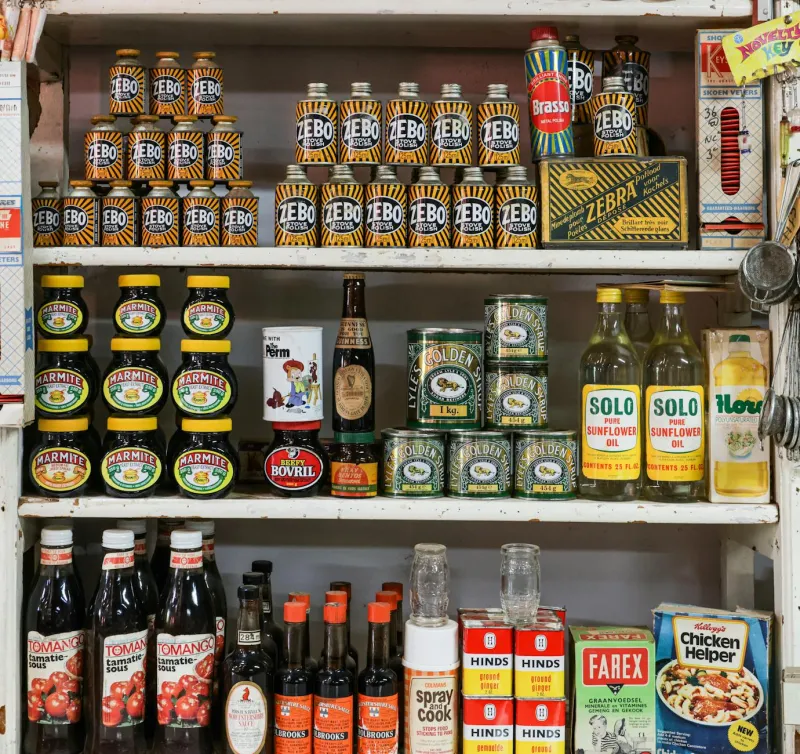
The Grocery Store Time Machine
Walk down any supermarket aisle today and you'll see them everywhere: "Low Fat!" "Fat Free!" "Reduced Fat!" These bright yellow labels have become so common they're practically invisible, but they represent one of the most dramatic dietary experiments in human history.
For nearly four decades, Americans have been told that fat is the enemy. We've stripped it from our yogurt, our cookies, our salad dressing, and our peace of mind. But here's the uncomfortable truth: the low-fat revolution that was supposed to make us healthier might have done exactly the opposite.
When Fat Became the Villain
The story begins in the 1950s with Ancel Keys, a charismatic researcher who noticed that wealthy American businessmen were dying of heart attacks at alarming rates. Keys had a theory: dietary fat, particularly saturated fat, was clogging arteries and killing Americans.
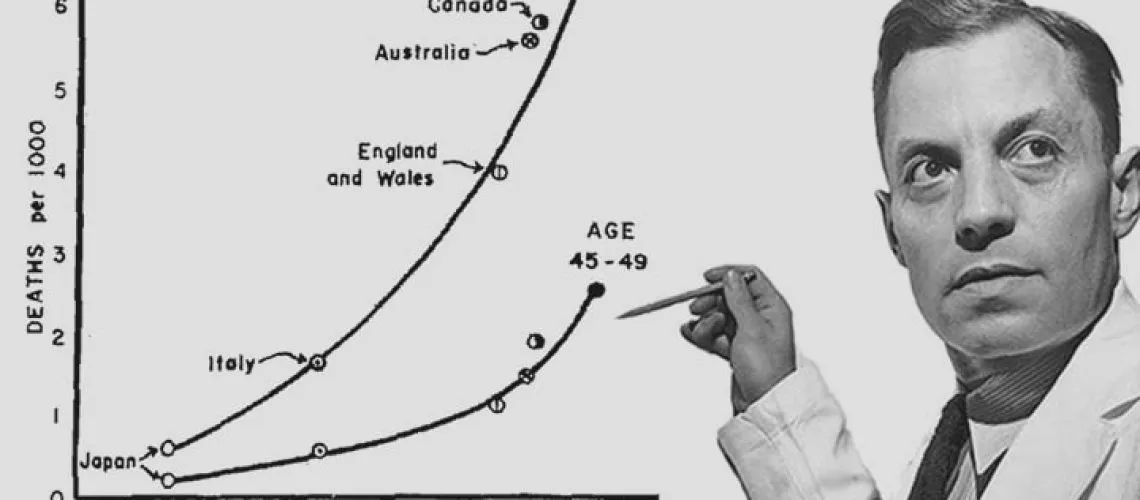 Photo: Ancel Keys, via www.truehealthinitiative.org
His famous Seven Countries Study seemed to prove it. Countries with higher fat consumption had higher rates of heart disease. The connection appeared obvious, compelling, and urgent.
But Keys' study had problems. He cherry-picked his data, ignoring countries that didn't fit his hypothesis. France, for instance, consumed plenty of saturated fat but had low heart disease rates — an inconvenient fact that wouldn't get a name (the "French Paradox") until decades later.
None of this mattered. By the 1970s, Keys' fat-heart disease theory had become medical gospel. The American Heart Association endorsed it. Government dietary guidelines enshrined it. And food companies saw opportunity.
The Great Reformulation
When fat became public enemy number one, food manufacturers faced a problem: fat makes food taste good. Remove it, and you're left with cardboard.
Their solution was simple and catastrophic: replace fat with sugar.
SnackWell's Devil's Food Cookie Cakes became the poster child for this transformation. Marketed as a guilt-free alternative to regular cookies, they contained almost no fat — and a staggering amount of sugar and refined carbohydrates. Americans bought them by the truckload, convinced they were eating health food.
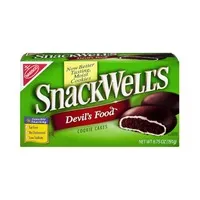 Photo: SnackWell's Devil's Food Cookie Cakes, via d2lnr5mha7bycj.cloudfront.net
The pattern repeated across thousands of products. Yogurt manufacturers removed fat and added high fructose corn syrup. Salad dressing companies created "light" versions loaded with sugar and artificial thickeners. Even bread got a makeover, with added sugars to compensate for reduced fat content.
The Sugar Rush Nobody Saw Coming
What happened next should have been predictable, but somehow wasn't. As Americans dutifully reduced their fat intake throughout the 1980s and 1990s, obesity rates skyrocketed.
In 1980, 15% of American adults were obese. By 2000, that number had doubled to 30%. Today, it's approaching 40%. The timeline matches the low-fat craze almost perfectly.
Meanwhile, the promised heart health benefits never materialized. Despite massive reductions in dietary fat, heart disease remained America's leading killer. Some studies even suggested that certain types of fat — like the omega-3s found in fish and nuts — were actually protective.
Why Sugar Became the Real Enemy
The problem with the fat-for-sugar swap wasn't just calories. Sugar affects your body differently than fat does. When you eat fat, you feel full relatively quickly and stay satisfied longer. When you eat sugar, your blood glucose spikes, crashes, and leaves you hungrier than before.
Those "fat-free" cookies that were supposed to be healthier? They often contained more calories than the original versions, and they left people craving more. The low-fat label became a license to overeat.
Worse, emerging research suggested that sugar — not fat — might be the real driver of heart disease. High sugar consumption appeared linked to inflammation, insulin resistance, and the exact cardiovascular problems the low-fat diet was supposed to prevent.
The Marketing Machine That Wouldn't Stop
Even as evidence mounted against the low-fat hypothesis, the marketing machine kept running. "Low fat" had become a billion-dollar selling point. Food companies had invested heavily in reformulated products and weren't about to abandon them.
The American public, meanwhile, had been so thoroughly convinced that fat was dangerous that many still believe it today. Survey after survey shows that people rate "low fat" foods as healthier, even when they contain more calories and sugar than full-fat alternatives.
The Slow Science of Changing Minds
It took decades for mainstream nutrition science to acknowledge what some researchers had suspected all along: the low-fat diet was built on shaky foundations.
Today, most nutrition experts agree that the type of fat matters more than the amount. Olive oil, avocados, and nuts — once forbidden on low-fat diets — are now considered health foods. Meanwhile, sugar has become the new dietary villain.
But changing public perception is harder than changing scientific consensus. The "fat is bad" message is so deeply embedded in American culture that many people still reach for fat-free products without thinking twice.
Reading Between the Label Lines
The next time you see a "low fat" label, remember its history. That innocent-looking claim represents one of the largest uncontrolled dietary experiments ever conducted — and the results weren't pretty.
This doesn't mean you should start putting butter on everything. But it does mean that the fear of fat that shaped American eating habits for decades was largely misplaced. The real lesson of the low-fat era isn't about fat at all — it's about how quickly good intentions, flawed science, and powerful marketing can combine to reshape what an entire nation thinks it knows about food.
Sometimes the cure really is worse than the disease.