Sleep Anxiety Is Keeping More Americans Awake Than Actual Insomnia
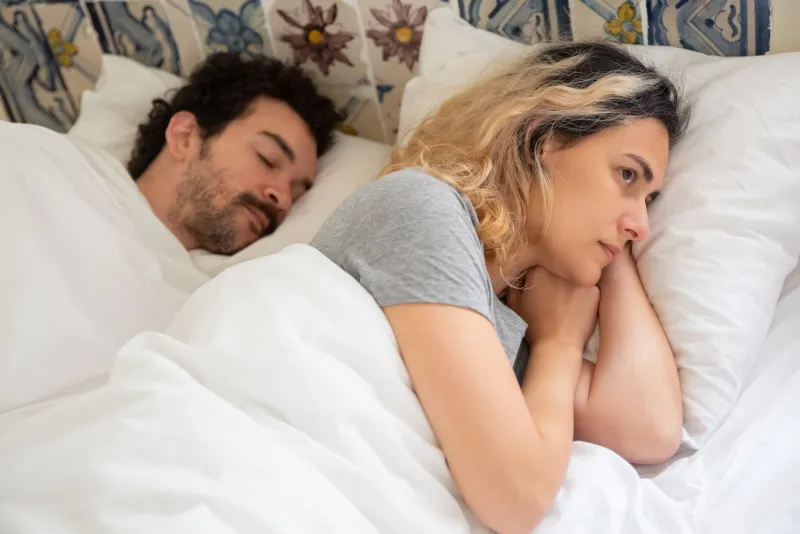
The Number That Took Over Your Bedtime
At some point in your life, someone told you that eight hours of sleep is what a healthy adult needs. Maybe it was a parent, a doctor, or a wellness influencer with a white linen aesthetic and a sunrise alarm clock. And now, if you wake up at 6:47 AM before your 7:00 alarm, there's a decent chance your first thought isn't relief — it's something closer to great, I only got seven hours and forty-seven minutes.
That anxious mental calculation? Researchers have a name for it. And it's making your sleep measurably worse.
Where the Eight-Hour Rule Actually Came From
Here's the thing most people don't know: the eight-hour sleep target didn't come from a sleep lab. It came from a labor movement.
In the early 19th century, Welsh activist Robert Owen coined the slogan "eight hours labor, eight hours recreation, eight hours rest" as a rallying cry against brutal factory working conditions that sometimes demanded 14-hour shifts. It was a political statement about workers' rights, not a biological prescription for optimal rest.
 Photo: Robert Owen, via c8.alamy.com
The number stuck, got laundered through decades of cultural repetition, and eventually arrived in mainstream health messaging dressed up as medical fact. By the time sleep research became a serious scientific field in the mid-20th century, eight hours was already so deeply embedded in public consciousness that it became the default benchmark — even though the data never quite supported it as a universal standard.
Sleep scientists will tell you something different: healthy sleep duration varies significantly between individuals, ranging from roughly six to nine hours for most adults, with a smaller percentage of people genuinely thriving on less or needing more. Age, genetics, activity level, and overall health all influence what your body actually needs on a given night.
The New Diagnosis: Orthosomnia
In 2017, researchers at Rush University Medical Center published a paper introducing a term that has since spread through sleep medicine circles: orthosomnia. It describes a pattern where people become so preoccupied with achieving perfect sleep — often driven by fitness trackers and sleep apps showing them their nightly scores — that the preoccupation itself disrupts their ability to sleep.
 Photo: Rush University Medical Center, via 4.bp.blogspot.com
Think about the logic for a second. You go to bed, check your Oura ring data from the night before, learn you got 6.5 hours with only 14% deep sleep, and now you're lying in the dark with your nervous system quietly convinced that tonight needs to be better. That low-grade vigilance — the mental monitoring — activates exactly the kind of arousal response that keeps you from falling asleep.
It's the sleep equivalent of trying too hard to remember a word. The effort itself blocks the outcome.
And this isn't a fringe concern. A 2019 survey found that roughly one in three American adults report regularly not getting enough sleep, but clinical sleep researchers note that a meaningful portion of people who believe they have a sleep problem are actually sleeping normally — they've just been convinced by the eight-hour standard that they're falling short.
What Healthy Sleep Variation Actually Looks Like
Sleep needs aren't static. They shift across your lifespan, across seasons, across periods of stress or recovery. A 24-year-old training for a marathon might genuinely need more sleep than a 45-year-old who works a desk job. Someone recovering from illness needs more. Someone in a low-demand week might need less.
Night-to-night variation is also completely normal. You might sleep deeply for nine hours after a hard week and bounce out of bed alert after six and a half hours on a Sunday. Neither of those nights is a malfunction.
What sleep scientists look at instead of raw hours are functional markers: Do you feel reasonably alert during the day without relying on caffeine as a lifeline? Can you concentrate? Do you fall asleep within a reasonable window when you intend to? Those are better indicators of sleep health than whether you hit a specific number.
The American Academy of Sleep Medicine does recommend seven or more hours for adults, and that guidance is grounded in population-level research linking chronic short sleep to health risks. But "seven or more" is a floor, not a target — and it's a general guideline, not a nightly scorecard.
 Photo: American Academy of Sleep Medicine, via vectorseek.com
The Worry Loop That Feeds Itself
Here's what makes this particularly tricky: sleep and anxiety have a bidirectional relationship. Poor sleep can worsen anxiety. But anxiety about sleep is itself a well-documented cause of poor sleep. If you've ever lain awake doing math about how many hours you'll get if you fall asleep right now, you've lived inside that loop.
Cognitive behavioral therapy for insomnia — CBT-I, which is now considered the first-line treatment over sleep medication by most sleep specialists — spends a significant portion of its time addressing exactly this: the unhelpful beliefs and mental habits around sleep that perpetuate the problem. One of the most common targets? The rigid conviction that anything less than eight hours is a health emergency.
Reducing sleep effort — essentially, caring less about whether you sleep perfectly — is a core therapeutic technique. Which sounds almost insultingly simple, until you realize how hard it actually is to implement when you've been told for decades that your health depends on hitting a number.
The Takeaway
The eight-hour rule isn't wrong exactly — it's just not the universal law it became. For most people, somewhere between seven and nine hours works. For some, a bit less is genuinely fine. What's not fine, according to the research, is lying awake in the dark catastrophizing about your sleep tracker's verdict.
If you wake up feeling functional most days, you're probably doing better than you think. And if you're genuinely concerned about your sleep, a conversation with a doctor is worth more than a closer look at your app's sleep stage breakdown at 6 AM.