That Full Glass of Water With Your Pills Isn't About Absorption — It's About Keeping You Safe
The Assumption Almost Everyone Makes
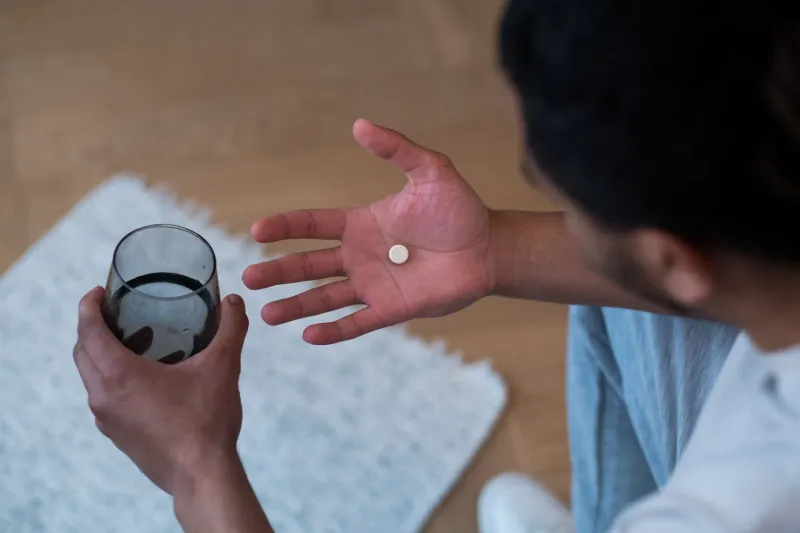
You've heard it your whole life. Take your medication with a full glass of water. Most of us nod, fill up a glass, and assume we're helping our bodies process the drug more efficiently — like the water is some kind of delivery system that shuttles the pill into the bloodstream faster or more completely.
It's a logical guess. Water helps things dissolve. Hydration is generally good for you. Seems reasonable.
But that reasoning is almost entirely wrong. The full glass of water instruction has very little to do with how your body absorbs medication. It has everything to do with protecting a stretch of tissue most people never think about: your esophagus.
What Actually Happens When You Swallow a Pill
Here's something that doesn't get talked about enough: pills don't always make it all the way down. The esophagus — the muscular tube connecting your throat to your stomach — isn't a guaranteed express lane. It relies on muscular contractions called peristalsis to move things along, and those contractions can fail to push a pill all the way through, especially if you swallow with very little liquid, lie down right after, or take medication right before bed.
When a pill gets stuck — even partially, even briefly — it can start dissolving right there in the esophageal lining. And some medications are genuinely caustic. Certain antibiotics, anti-inflammatory drugs like ibuprofen, potassium supplements, and especially a class of drugs called bisphosphonates (commonly prescribed for osteoporosis) can cause chemical burns to esophageal tissue. This condition even has a clinical name: pill esophagitis.
Symptoms include chest pain, difficulty swallowing, and a persistent burning sensation that people often mistake for heartburn or acid reflux. In serious cases, it can lead to ulceration and scarring. Emergency rooms see it more often than you'd expect, and the majority of cases are entirely preventable.
Why the 'Full Glass' Rule Exists
The full glass of water instruction — typically defined as six to eight ounces — is designed to do two things. First, it creates enough fluid volume to physically carry the pill down through the esophagus and into the stomach, reducing the chance it lodges somewhere along the way. Second, it keeps the esophageal lining coated and diluted in case any medication starts dissolving early.
Pharmacists have understood this for decades, but the explanation rarely makes it onto prescription labels or medication guides. Instead, patients get the instruction without the context, fill in the blank with their own logic, and land on the absorption story.
The absorption angle isn't completely without merit — staying hydrated does support kidney function and general metabolism — but it's not the primary reason pharmacists care whether you drink a full glass. The real concern is physical safety, not pharmacokinetics.
The Medications That Make This Most Critical
Not every pill carries the same risk. Soft gel capsules and liquid formulations are generally less problematic. But certain tablets — particularly large ones, coated ones, or those with extended-release mechanisms — are the ones that tend to linger.
Bisphosphonates deserve special mention here. Drugs like alendronate (Fosamax), commonly prescribed to postmenopausal women for bone density, come with instructions to take them with a full eight-ounce glass of water and remain upright for at least 30 minutes afterward. That last part is just as important as the water. Lying down after swallowing these medications significantly increases esophageal contact time, which dramatically raises the risk of damage.
Doxycycline, a widely used antibiotic, has a well-documented history of causing pill esophagitis — particularly when taken right before bed with a small sip of water. College students prescribed it for acne or tick-bite prevention are among the most common victims, simply because nobody explained why the water instruction actually matters.
Why the Myth Persists
The absorption story stuck because it sounds scientific and it fits neatly into how people think about medicine. We generally believe that more hydration equals better function, and that logic isn't wrong across the board. It just doesn't apply here in the way most people assume.
Medical instructions are also notoriously light on explanation. Labels tell you what to do, not why. In that vacuum, people construct their own reasoning — and once a plausible explanation takes hold, it's remarkably hard to dislodge.
There's also the fact that pill esophagitis, while genuinely common, often resolves on its own or gets misdiagnosed as acid reflux. People don't connect their chest discomfort to the antibiotic they took dry two nights ago, so the causal link never registers.
What to Actually Do
The practical guidance hasn't changed — take your pills with a full glass of water — but the reason to do it is more compelling than you probably realized. You're not optimizing absorption. You're protecting your esophageal lining from a medication that could otherwise sit and burn.
A few other things worth knowing: staying upright for at least a few minutes after swallowing is genuinely helpful, especially for larger tablets. Taking medication right before lying down is one of the most common setups for pill esophagitis. And if you ever feel unusual chest pain or difficulty swallowing after starting a new medication, it's worth mentioning to a doctor rather than assuming it's unrelated.
The habit was right all along. The story behind it just got lost somewhere between the pharmacy counter and your medicine cabinet.