The Placebo Effect Isn't a Polite Way of Saying You Imagined It
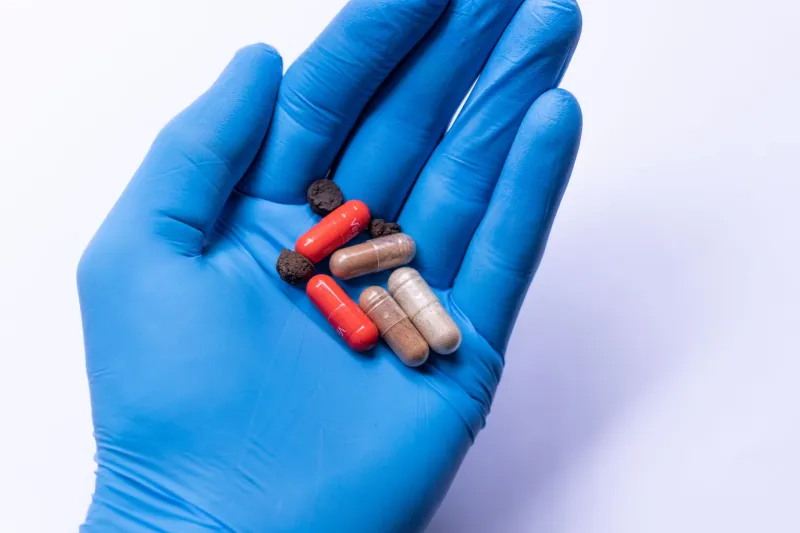
The Most Underestimated Phenomenon in Medicine
Imagine you've been dealing with chronic back pain for months. A doctor gives you a pill, tells you it's a new treatment, and within a few weeks your pain has genuinely decreased. Then you find out the pill was inert — no active ingredient, just compressed sugar. What just happened?
The easy answer — the one most people reach for — is that you were fooled. Your pain wasn't real, or your improvement wasn't real, or your brain played a trick on itself. The phrase "it's all in your head" tends to show up somewhere in this explanation.
But that framing gets the biology almost completely wrong. And unpacking why reveals something genuinely fascinating about how the human body responds to expectation.
What's Actually Happening in the Body
The placebo effect — the measurable improvement in symptoms that occurs in response to a treatment with no pharmacological activity — has been studied seriously since the 1950s. For much of that time, it was treated as a nuisance variable in clinical trials, something researchers needed to control for rather than understand.
What the research has since revealed is considerably more interesting.
When a person receives a placebo treatment — a sugar pill, a saline injection, even a sham surgical procedure — and believes it might help, the brain doesn't just generate a vague sense of feeling better. It initiates specific, measurable neurochemical responses.
Studies using brain imaging have shown that placebo pain relief activates the same neural pathways as opioid medications. The brain releases endogenous opioids — naturally occurring compounds that bind to pain receptors — in response to placebo administration. In one landmark study, researchers were able to block placebo pain relief by administering naloxone, a drug that blocks opioid receptors. If the placebo response were purely psychological, blocking opioid receptors shouldn't have made any difference. It did.
Similar mechanisms have been documented in other conditions. In Parkinson's disease research, placebos have been shown to trigger genuine dopamine release in the brain — the same neurotransmitter that Parkinson's progressively depletes. Patients showed measurable motor improvements, not just subjective ones. In studies of depression, placebo antidepressants have produced brain activity changes that partially overlap with those produced by active medications.
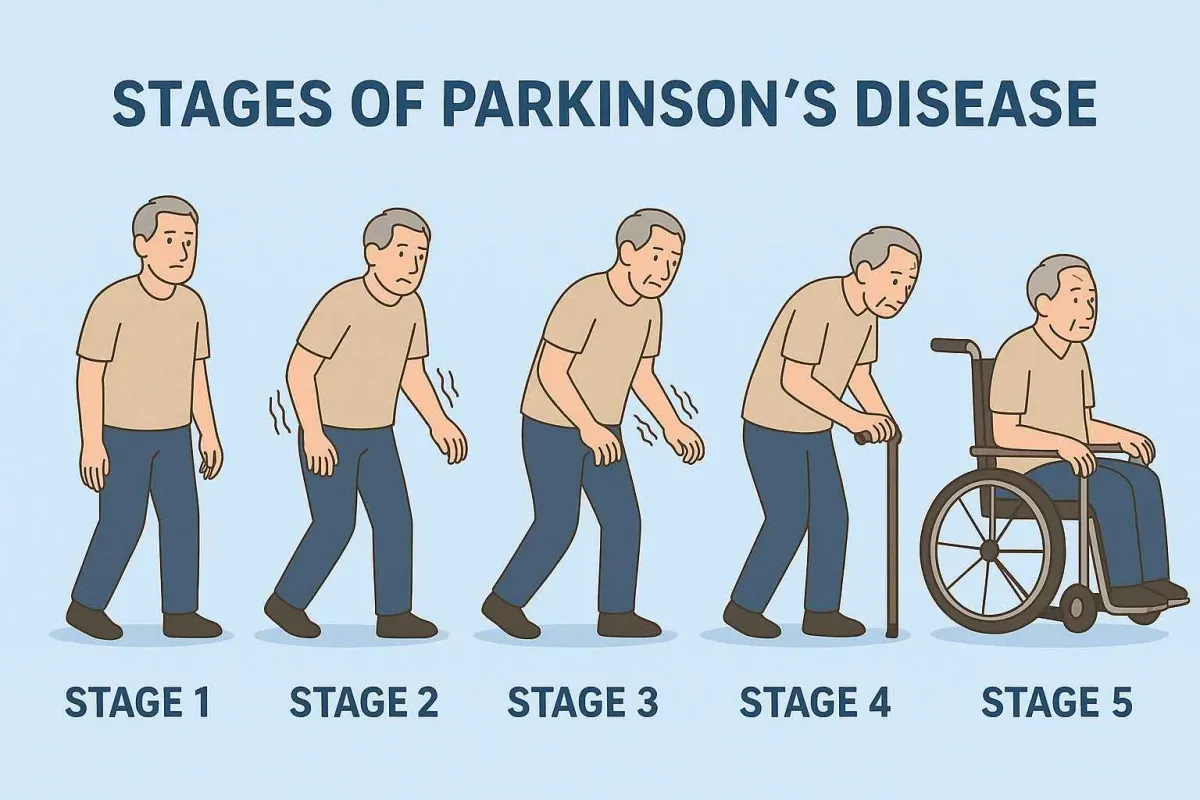 Photo: Parkinson's disease, via cdn.credihealth.com
This is not imagining. This is your body manufacturing a real pharmacological response based on expectation.
The Open-Label Placebo: The Part That Breaks Your Brain
Here's where the science gets genuinely strange.
For a long time, the accepted logic was that placebos required deception to work. You had to believe you were getting a real treatment. That assumption seemed so obvious it barely needed testing.
Then researchers tested it anyway.
In a series of studies conducted at Harvard's Program in Placebo Studies, patients with irritable bowel syndrome — a condition notoriously difficult to treat — were given placebo pills and explicitly told: These are placebo pills. They contain no medication. But research suggests they can still be helpful.
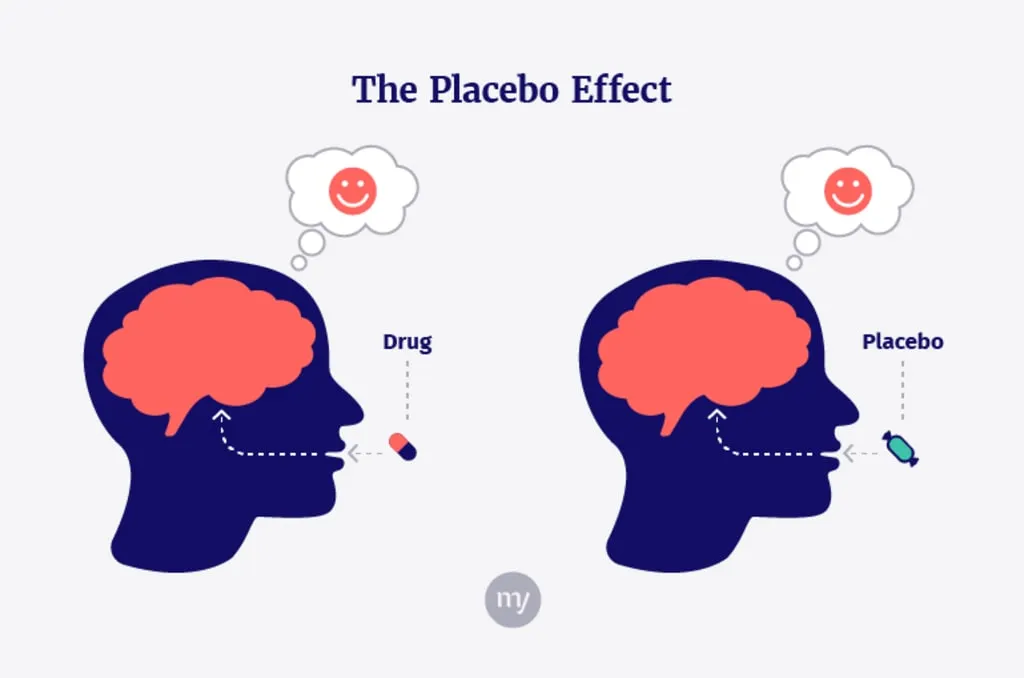 Photo: Harvard's Program in Placebo Studies, via res.cloudinary.com
A significant portion of those patients improved, at rates that outperformed the no-treatment control group. Similar results have been replicated in studies of chronic low back pain, cancer-related fatigue, and migraine. Open-label placebos — where patients know they're getting a sugar pill — have produced measurable symptom reduction across multiple conditions.
This finding overturns a foundational assumption about how placebos work. The mechanism isn't simply naive belief. Researchers hypothesize that the ritual of treatment itself — taking a pill, following a protocol, engaging with a healthcare system that's paying attention to you — activates conditioned physiological responses that are partially independent of conscious belief.
Your nervous system, in other words, has been trained by a lifetime of taking medicine and feeling better. Some of that conditioning may run deeper than your conscious understanding of what's in the bottle.
Why We Dismiss It Anyway
Despite decades of solid research, the placebo effect remains culturally undervalued — and the reasons are worth examining.
Part of it is linguistic. Calling something a "placebo response" in casual conversation is often shorthand for not real — a way of minimizing someone's experience. The phrase carries a faint implication of gullibility. If your improvement was just a placebo, it somehow doesn't count.
But as the neurochemistry makes clear, that framing doesn't hold up. A pain response mediated by endogenous opioids is a real pain response, regardless of what triggered the opioid release. The mechanism is genuine even if the catalyst was a sugar pill.
There's also a pharmaceutical industry dimension to this. Drug trials are designed to demonstrate that an active compound outperforms placebo — and when the gap is narrow, it's sometimes in no one's commercial interest to celebrate how much the placebo group improved. The placebo response is treated as background noise to overcome rather than a phenomenon worth studying in its own right.
What This Means for Everyday Health
None of this means that placebos should replace medicine, or that belief alone can cure serious illness. The research is clear that placebo responses are strongest for subjective symptoms — pain, fatigue, nausea, depression — and much weaker for things like tumor reduction or blood sugar regulation. Expectation can move a lot of levers, but not all of them.
What it does mean is that the context surrounding a treatment matters more than most people realize. How a doctor communicates with a patient, how much confidence is conveyed, how much care and attention is present in the clinical interaction — these things have measurable effects on outcomes, independent of the treatment itself. This is sometimes called the "therapeutic relationship," and it's not soft or fuzzy. It's biology.
It also means that dismissing your own improvement as "just placebo" may be selling your nervous system short. If your pain decreased, your pain decreased. The pathway matters less than the outcome.
The Takeaway
The placebo effect is not a trick the mind plays on itself. It's a real physiological process, documented with brain imaging and neurochemical measurement, that can produce genuine symptom relief — sometimes even when the patient knows they're getting a sugar pill.
The dismissal of it as "all in your head" is itself a misconception. And ironically, it's one of the more interesting myths to unpack — because the truth reveals just how much of our biology operates below the level of what we consciously believe.