The Head Heat Loss 'Rule' Came From a Single Army Experiment — And Nobody Read It Carefully

The Head Heat Loss 'Rule' Came From a Single Army Experiment — And Nobody Read It Carefully
If you grew up in the United States, someone — a parent, a coach, a school nurse — probably told you that you lose most of your body heat through your head. Maybe it was 40 percent. Maybe it was 75 percent. The exact number shifted depending on who was telling the story, but the core message stayed the same: cover your head or you'll freeze.
It sounds like settled science. It has the ring of something a doctor once confirmed. And it has shaped the way American parents dress their children for winter for at least two generations.
There's just one problem. The original research that launched this idea doesn't say what most people think it says — and once you actually look at what the study did, the whole thing unravels pretty quickly.
Where the Idea Actually Came From
The story traces back to a series of cold-weather survival experiments conducted by the U.S. Army in the 1950s. Researchers were trying to understand how soldiers could stay alive in extreme arctic conditions, and they ran tests measuring heat loss from different parts of the body.
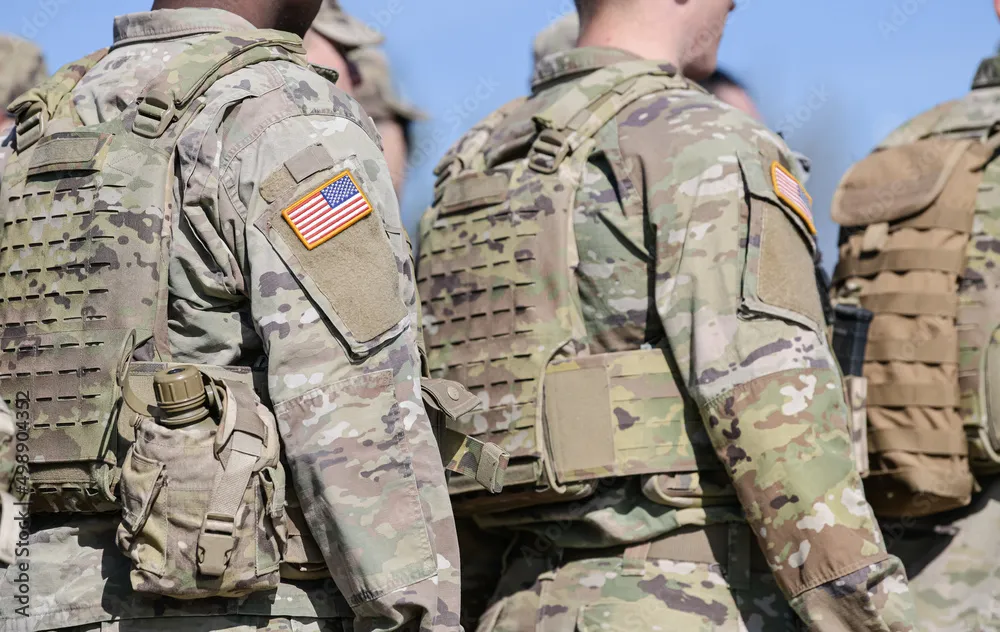 Photo: U.S. Army, via as2.ftcdn.net
Here's the critical detail that got lost in translation: the test subjects were dressed in full Arctic military gear from the neck down. Their entire bodies were heavily insulated — every inch except their heads, which were left exposed to the cold.
When researchers measured where heat was escaping, the head accounted for a large percentage of total heat loss. And technically, that was accurate — given those specific conditions. But the conclusion that got carried forward into popular culture skipped the context entirely. People heard "the head loses the most heat" without the footnote that explained the rest of the body was sealed under insulating military gear.
If you ran the same experiment with only your feet exposed, you'd conclude that feet are responsible for most of your heat loss. That's not a discovery about feet — it's just math.
What Heat Loss Actually Looks Like
Your body loses heat from exposed skin. That's the whole story. The head doesn't have any special biological property that makes it a heat-escape hatch. It doesn't have uniquely dense blood vessels or some thermal quirk that other body parts lack.
What the head does have is surface area — and in situations where it's the only part of you that's uncovered, it will do a disproportionate share of the losing. But that's a clothing problem, not an anatomy problem.
Researchers at the University of Manitoba and other institutions have revisited this question over the years, and the findings are pretty consistent: heat loss is roughly proportional to the amount of skin exposed to cold air. Your head accounts for somewhere around 10 percent of your body's total surface area. In an evenly exposed body, it loses about 10 percent of your total heat. Not 40. Not 75. Around 10.
 Photo: University of Manitoba, via www.edumasters.in
That's still worth covering — 10 percent matters when temperatures drop below freezing. But it's not the catastrophic thermal drain that decades of parenting advice implied.
How the Myth Got Legs
The Army study results made their way into a 1970 military field manual that was widely circulated and quoted. From there, the finding got picked up by health educators, pediatricians passing along received wisdom, and eventually the kind of general-knowledge books that end up in school libraries and doctor's waiting rooms.
At no point in that chain did most people go back to the original research and ask what conditions produced the finding. The 40-percent figure (or whatever version was being cited at the time) had the authority of military science behind it, and that was enough.
Parenting culture, in particular, latched onto it hard. The image of a bundled-up child in a heavy coat with a bare head became a kind of shorthand for irresponsible parenting. Mothers and grandmothers across the country became enforcers of the hat rule, sometimes with genuine urgency, as if leaving the house without a beanie was a medical emergency.
The rule also had a certain intuitive appeal. Your head does feel cold when exposed. Cold air against your scalp is noticeable and uncomfortable in a way that cold air against a covered arm isn't. So the sensation seemed to confirm the science — even though what you're feeling is just exposed skin responding to temperature, which is exactly what skin is supposed to do.
What This Means for How You Actually Dress for Cold
None of this means hats are useless. Covering your head in cold weather is still a genuinely good idea — you're reducing heat loss from an exposed area, which is always worth doing. The myth isn't that hats help. The myth is that your head is uniquely critical to the equation.
The practical implication is that layering your whole body matters more than obsessing over any single part. Keeping your core warm is particularly important because your body prioritizes heat for your vital organs — when your core temperature drops, blood flow to your extremities gets restricted as a protective response, which is why fingers and toes go numb first.
In other words, a good jacket matters at least as much as a hat. Warm socks matter. Gloves matter. Your head is one piece of the puzzle, not the keystone of your entire thermal situation.
The Takeaway
The head heat loss rule is a classic case of a real finding being stripped of its context and turned into a universal law. The Army experiment was legitimate science applied to a specific question about soldiers in specific gear. What it was not was a general statement about human anatomy — and somewhere between the field manual and your grandmother's advice, that distinction disappeared entirely.
Your head is worth covering in the cold. So is everything else.