Your Achy Joints Really Can Predict the Weather—But Not How You Think They Do
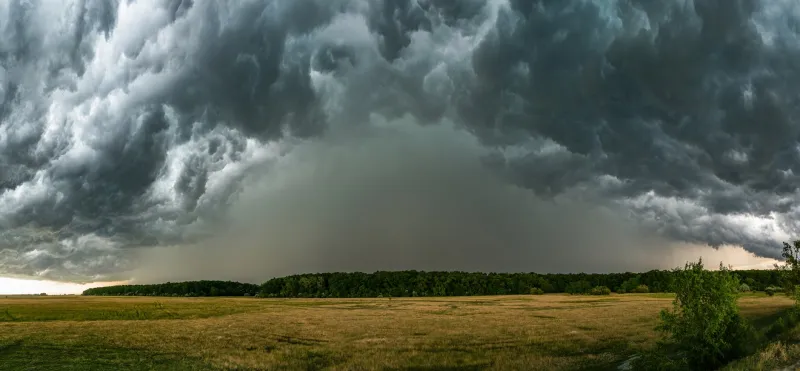
Ask any group of Americans over 50 about weather prediction, and you'll hear the same story: their knees, hips, or old sports injuries start aching hours before a storm rolls in. For decades, doctors largely dismissed these claims as folklore, the kind of old wives' tale that persists despite having no scientific basis.
Turns out, both sides were missing part of the picture.
The Grandmother Weather Station Phenomenon
The connection between joint pain and weather changes is one of America's most persistent health beliefs. Surveys suggest that up to 75% of people with arthritis or chronic joint pain believe weather affects their symptoms. Many claim they can predict rain, snow, or storms with startling accuracy—sometimes better than the local meteorologist.
For years, the medical establishment treated these reports with polite skepticism. After all, if the connection was real, why couldn't researchers consistently prove it in controlled studies?
The Science That Wasn't There
Early attempts to study weather-related joint pain ran into immediate problems. Researchers would track patients' pain levels alongside barometric pressure, humidity, and temperature, expecting to find clear correlations. Instead, they found a mess of conflicting data that seemed to support the skeptics.
Some studies showed slight correlations between dropping barometric pressure and increased pain. Others found the opposite. Many found no relationship at all. The inconsistency led most doctors to conclude that weather-related joint pain was purely psychological—a case of people noticing patterns that weren't really there.
What the Research Was Missing
The problem with early weather-pain studies wasn't the concept—it was the methodology. Researchers were looking for universal patterns that applied to everyone with joint pain, when the reality is far more individualized and complex.
Recent research has taken a different approach. Instead of looking for one-size-fits-all correlations, scientists started tracking individual patients over longer periods, accounting for personal baselines and specific weather sensitivities. The results have been eye-opening.
The Barometric Pressure Connection (Sort Of)
It turns out that some people really are sensitive to barometric pressure changes—the atmospheric pressure that drops before storms. But it's not as simple as "low pressure equals pain." The relationship depends on several factors that early studies didn't account for:
Individual sensitivity varies wildly. Some people respond to pressure drops of just a few millibars, while others need dramatic changes to notice any difference.
It's about the rate of change, not absolute pressure. A gradual pressure drop over several days might not trigger symptoms, while a rapid drop over hours could cause significant discomfort.
Pre-existing inflammation matters. People with active joint inflammation appear more sensitive to pressure changes than those with mild or well-controlled arthritis.
The Psychology of Pattern Recognition
Here's where things get really interesting: even when there is a genuine physical connection between weather and joint pain, people often misinterpret what's happening. Our brains are excellent at finding patterns, sometimes too excellent.
Someone might experience joint pain on a rainy Tuesday and remember it vividly, while forgetting the three sunny days when their joints also hurt. This selective memory reinforces the belief in weather sensitivity even when the actual correlation is weak or nonexistent.
But—and this is crucial—just because some weather-pain connections are psychological doesn't mean they all are.
The Nerve Factor
Recent research has identified another piece of the puzzle: nerve sensitivity. Changes in barometric pressure can affect how nerves fire, particularly in people with existing nerve damage or inflammation around joints. This isn't about joint tissues directly responding to pressure—it's about the nervous system becoming more sensitive to existing problems when atmospheric conditions change.
This helps explain why weather sensitivity seems to increase with age or after injuries. It's not that joints become more fragile—it's that the nervous system becomes more reactive to environmental changes.
The Real Weather-Pain Connection
So what's actually happening when your knee starts aching before a thunderstorm? The most likely explanation combines several factors:
- Genuine barometric sensitivity in some individuals, probably related to nerve function rather than direct pressure on joints
- Confirmation bias that makes weather-related pain episodes more memorable than non-weather-related ones
- Individual variation that makes population-wide studies nearly impossible to interpret
- Multiple triggers working together—pressure, humidity, temperature changes, and even electromagnetic changes associated with storms
Why This Matters
The weather-pain debate illustrates a common problem in medical research: dismissing patient experiences because they don't fit into neat scientific categories. For years, doctors essentially told millions of Americans that their lived experience was imaginary, when the reality was that science simply hadn't caught up to the complexity of what they were reporting.
Today's more nuanced understanding suggests that weather sensitivity is real for some people, sometimes, under certain conditions. It's not the reliable forecasting tool that folklore suggests, but it's not pure imagination either.
The Takeaway
If you swear your joints predict storms, you're probably not wrong—but you might be wrong about why it happens. The connection likely has more to do with your nervous system than with your cartilage, and it's probably more variable than you realize.
More importantly, the weather-pain story is a reminder that complex biological phenomena rarely fit into simple true-or-false categories. Sometimes the most honest answer is that both the believers and the skeptics were partially right—and that the full truth is more interesting than either side originally imagined.