The Left Brain vs. Right Brain Personality Test Was Never Real Science — So Why Does Everyone Still Believe It?
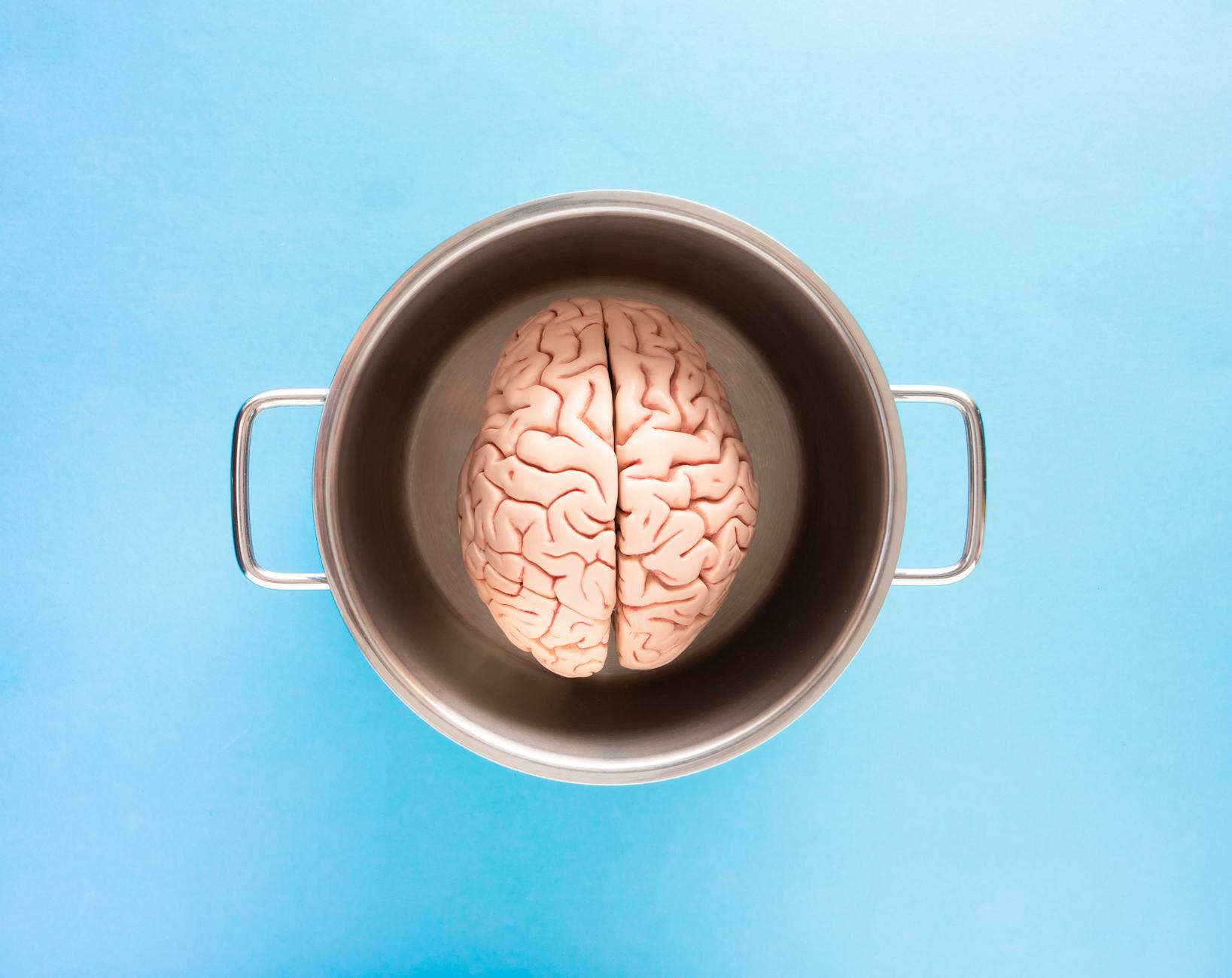
The Quiz That Felt Like Self-Discovery
At some point — maybe in middle school, maybe in a workplace team-building session — someone handed you a personality quiz. A few questions later, you were sorted: left-brained, meaning logical, analytical, and organized, or right-brained, meaning creative, intuitive, and free-spirited. It felt like a useful shorthand for who you are.
The only problem? Neuroscientists say that's not how the brain works. Not even close.
The left brain/right brain personality model is one of the most durable myths in American pop psychology, and its staying power is genuinely impressive given how thoroughly researchers have picked it apart. But to understand why the myth exists — and why it felt so believable — you have to go back to where it actually started.
The Real Science That Got Stretched Beyond Recognition
In the early 1960s, neurosurgeon Joseph Bogen and researcher Roger Sperry began working with a small group of patients who had undergone a procedure called a corpus callosotomy. These patients had severe epilepsy, and surgeons had cut the corpus callosum — the thick band of nerve fibers that connects the brain's two hemispheres — to reduce seizure activity.
Sperry and his colleagues ran a series of experiments on these split-brain patients, and the results were genuinely fascinating. When information was presented only to the right visual field (processed by the left hemisphere), patients could name objects. When the same information was presented only to the left visual field (processed by the right hemisphere), patients couldn't name the objects verbally — but they could pick them out by touch.
The finding was real, significant, and earned Sperry the Nobel Prize in Physiology or Medicine in 1981. The left hemisphere, it turned out, does handle most language processing in most people. The right hemisphere tends to handle spatial reasoning and certain aspects of visual processing.
That's legitimate neuroscience. But here's where things went sideways.
From Lab Finding to Personality Framework
Somewhere between the research journals and the general public, some people process language on the left side of the brain got translated into logical people are left-brained and creative people are right-brained. That leap is enormous — and it was never supported by the original data.
Sperry's research was conducted on a very small number of patients who had an unusual surgical alteration. Their brains had been literally disconnected in a way no typical brain ever is. Generalizing from that population to the entire human race as a personality-sorting system was, to put it charitably, a stretch.
By the 1970s and 1980s, the left brain/right brain idea had escaped the lab entirely. Self-help books ran with it. Education reformers used it to argue that schools were favoring "left-brained" students. Creativity consultants built entire workshops around it. The framework was simple, it felt profound, and it gave people a vocabulary for something they genuinely wanted to understand: why people seem to think differently.
What Brain Scans Actually Show
Modern neuroimaging technology has given researchers a much clearer picture of how the brain actually operates — and it looks nothing like a two-sided personality chart.
A landmark 2013 study from the University of Utah analyzed brain scans from over 1,000 people and found no evidence that individuals consistently use one hemisphere more than the other. Whether someone was doing something analytical or creative, both hemispheres were active and communicating constantly.
The brain is deeply interconnected. Most complex tasks — reading, problem-solving, making art, doing math — draw on networks spread across both hemispheres simultaneously. Even language processing, the function most associated with the left hemisphere, involves the right hemisphere in important ways, particularly when it comes to understanding tone, metaphor, and context.
As neuroscientist Jeff Anderson, one of the study's authors, put it: the idea that people can be divided into left-brained and right-brained thinkers is "not supported by brain imaging data."
Why the Myth Refuses to Die
So if the science doesn't back it up, why does the left brain/right brain model keep showing up in schools, career assessments, and personality tests?
A few reasons, honestly.
First, the original science was real — just misapplied. Because there is genuine lateralization in the brain (certain functions do lean toward one hemisphere), the myth has a kernel of truth to anchor itself to. That's often all a misconception needs to feel credible.
Second, the framework is satisfying. People like having a simple explanation for why they're better at some things than others. Saying "I'm right-brained" feels more interesting and self-aware than saying "I happen to be good at drawing and bad at spreadsheets."
Third, the myth got embedded in educational and professional systems before the debunking research had a chance to catch up. Once something is in textbooks and HR training materials, it takes a long time to root out — even when the science has moved on.
What This Actually Means for You
None of this means that people don't have different strengths, learning styles, or ways of approaching problems. They absolutely do. The brain is a deeply individual organ, and real differences in cognition exist for all kinds of reasons.
But those differences aren't neatly organized into a left side and a right side based on your personality type. The next time someone asks whether you're left-brained or right-brained, the most accurate answer is: both, constantly, and simultaneously.
The real story here isn't just about neuroscience — it's about how easily a narrow lab finding can get laundered into a cultural truth that millions of people accept without question. That's a pattern worth noticing, and it's exactly the kind of thing worth unpacking.