Scientists Actually Put the Five-Second Rule to the Test — And the Results Will Surprise You
When Folk Wisdom Meets Laboratory Equipment
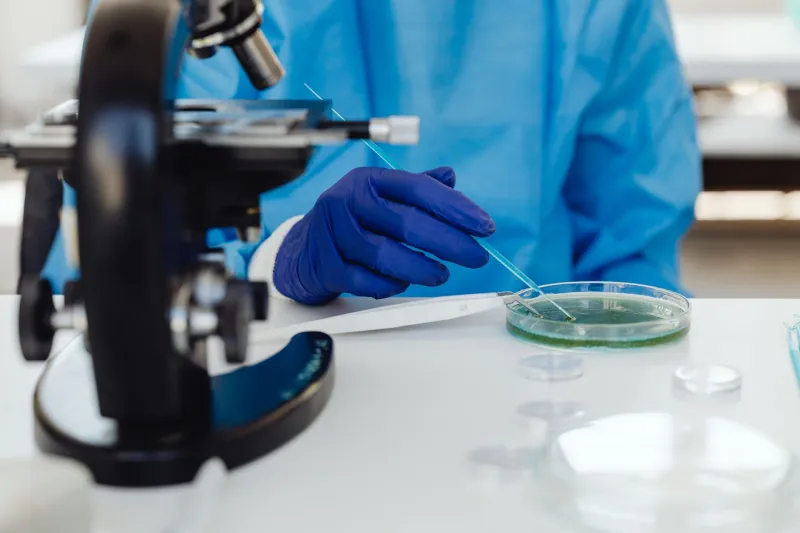
Picture this: a respected microbiology lab at Rutgers University, filled with sophisticated equipment, sterile surfaces, and researchers in lab coats. Their mission for the day? Dropping food on dirty floors and timing how long it takes for bacteria to jump aboard.
 Photo: Rutgers University, via media2.dev.to
It sounds like something from a comedy sketch, but in 2016, food scientist Donald Schaffner decided to put one of America's most beloved folk rules through rigorous scientific testing. The five-second rule—that magical window where dropped food supposedly remains safe to eat—was about to meet its match.
 Photo: Donald Schaffner, via i.ytimg.com
What Schaffner's team discovered wasn't just surprising; it revealed how spectacularly wrong our casual risk assessments can be.
The Most Scientifically Studied Joke in America
Almost everyone knows the five-second rule, and almost everyone treats it as a harmless bit of wishful thinking. Drop your sandwich? Quick calculation: was it down for more or less than five seconds? Less than five? Dust it off and carry on.
But Schaffner realized that this throwaway cultural saying represented something fascinating: a universal human attempt to quantify contamination risk using nothing but elapsed time. Millions of people were making food safety decisions based on a rule that had never been tested.
So his team set up what might be the most methodical study of floor food in scientific history. They prepared four different foods (watermelon, bread, buttered bread, and gummy candy), contaminated four different surfaces (stainless steel, ceramic tile, wood, and carpet) with bacteria, and then systematically dropped food items for predetermined lengths of time.
The results demolished several assumptions that most people take for granted.
Time Matters Less Than You Think
The biggest surprise? Bacteria don't wear watches. Contamination begins immediately upon contact, not after some magical five-second grace period.
In many cases, more than 99% of bacteria transferred to dropped food within the first second of contact. The difference between one second and five seconds was often negligible. Some foods picked up significant bacteria in less time than it takes to blink.
This finding alone should have ended the five-second rule forever. But the research revealed something even more interesting: the factors that actually determine contamination risk are completely different from what most people assume.
What Actually Matters (And It's Not What You'd Guess)
Time, the cornerstone of the five-second rule, turned out to be one of the least important variables. Instead, three other factors dominated contamination risk:
Surface type: Carpet transferred the least bacteria, while stainless steel and ceramic tile were the worst offenders. This is counterintuitive—most people would assume carpet is dirtier than hard surfaces, but its texture actually makes bacterial transfer more difficult.
Food moisture: Wet foods like watermelon picked up bacteria much faster than dry foods like bread. The more moisture, the easier it is for bacteria to make the jump from surface to snack.
Bacteria concentration: Unsurprisingly, surfaces with higher bacterial loads contaminated food more quickly and thoroughly. But here's what's interesting—even "clean" floors in the lab environment transferred detectable bacteria to dropped food.
These findings suggest that if you're going to eat dropped food (and the researchers definitely don't recommend it), you'd be better off applying the "dry food on carpet" rule rather than counting seconds.
Why We Cling to Magical Thinking About Germs
The five-second rule persists not because it's scientifically sound, but because it serves a psychological function. It gives us permission to do something we want to do anyway—eat that dropped cookie—while maintaining the illusion that we're being rational about risk.
This kind of magical thinking about contamination is everywhere in American culture. We'll invoke the five-second rule for a piece of pizza that hits the kitchen floor, then obsessively sanitize our hands after touching a doorknob. We'll eat gas station sushi without a second thought, then worry about bacteria on dropped food.
The research revealed how poorly calibrated our instincts are when it comes to microbial risk. We focus on easily measurable factors (like time) while ignoring the variables that actually matter (like surface type and food moisture).
The Broader Lesson About Risk Assessment
Schaffner's study illuminated something bigger than just food safety—it showed how humans create arbitrary rules to manage uncertainty, then follow those rules even when better information becomes available.
The five-second rule is appealing because it's simple, memorable, and gives us a sense of control. It transforms the complex question "Is this safe to eat?" into the simple question "How long was it on the floor?" But simplicity and accuracy are often inversely related.
This pattern shows up constantly in how we think about risk. We create easy-to-remember rules of thumb, then treat them as if they were based on careful analysis rather than convenience and wishful thinking.
What the Research Actually Recommends
The scientists' official recommendation? Don't eat food that's been on the floor, regardless of how long it was there. Bacterial contamination happens immediately, and the factors that determine contamination levels are impossible to assess in real-time.
But they also acknowledged that most people will continue eating dropped food occasionally, five-second rule or no five-second rule. If you're going to ignore their advice, at least ignore it intelligently: dry foods on carpeted surfaces are your safest bet, while moist foods on hard surfaces are asking for trouble.
The real value of the research isn't in perfecting our floor-food consumption strategies—it's in revealing how often we substitute convenient fiction for inconvenient truth.
The Rule That Refuses to Die
Despite being thoroughly debunked by actual laboratory research, the five-second rule shows no signs of disappearing. It's too useful as a social permission slip, too embedded in our collective habits.
And maybe that's okay. Not every folk belief needs to be scientifically accurate to serve a purpose. The five-second rule brings a moment of levity to minor kitchen disasters, creates shared understanding about acceptable risk-taking, and gives us permission to be slightly less wasteful with food.
Just don't mistake it for actual food safety guidance. When scientists put our casual assumptions to the test, they usually discover that reality is far more complicated—and interesting—than our convenient rules of thumb suggest.