The Bacterial Breakthrough That Took 20 Years to Change Medicine — And Your Mind
The Executive's Disease
For most of the 20th century, everyone knew what caused stomach ulcers: stress, spicy food, and the relentless pressure of modern American life. Ulcers were the badge of the overworked executive, the cost of climbing the corporate ladder, the inevitable result of too much coffee and not enough vacation time.
Doctors prescribed bland diets, stress management, and antacids. Patients were told to avoid tomatoes, cut back on alcohol, and learn to relax. The treatment rarely worked long-term, but the explanation made perfect sense. Of course your stomach would start eating itself if you were anxious enough.
Except it was almost completely wrong.
Two Guys from Down Under
In 1982, two Australian researchers named Barry Marshall and Robin Warren were looking at stomach tissue samples under a microscope when they noticed something odd: tiny spiral-shaped bacteria living in the stomachs of patients with gastritis and ulcers.
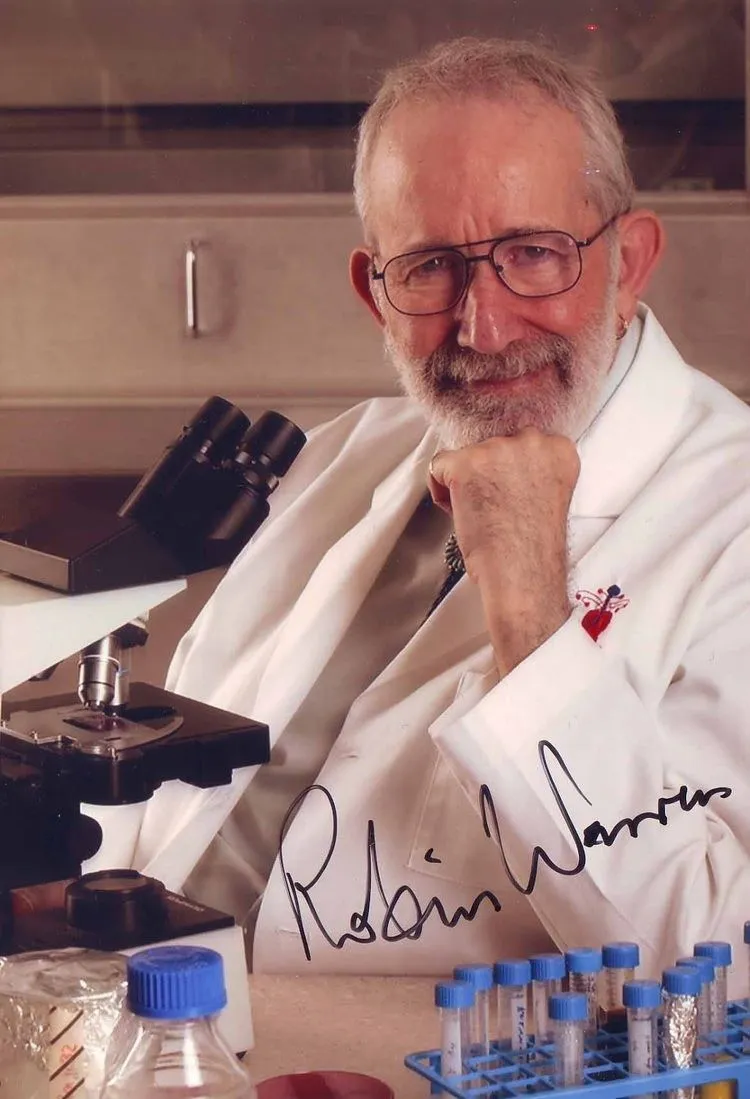 Photo: Robin Warren, via alchetron.com
This was supposed to be impossible. Medical textbooks taught that the human stomach was too acidic for bacteria to survive. The prevailing wisdom held that stress caused excess acid production, which burned holes in the stomach lining. Case closed.
But Marshall and Warren kept finding these bacteria — later named Helicobacter pylori — in patient after patient. The correlation was too strong to ignore: nearly everyone with ulcers had H. pylori infections, while most people without ulcers didn't.
They proposed a radical idea: what if ulcers weren't psychosomatic at all? What if they were just infections that could be cured with antibiotics?
The Medical Establishment Pushes Back
The response from the medical community was swift and dismissive. Gastroenterologists had built entire careers around treating ulcers as chronic conditions requiring lifelong management. The idea that you could cure them with a two-week course of antibiotics seemed absurd.
Pharmaceutical companies weren't thrilled either. The acid-blocking medications used to treat ulcers were billion-dollar blockbusters. Patients took them for years, sometimes decades. A simple antibiotic cure would destroy that revenue stream overnight.
When Marshall and Warren tried to publish their findings, medical journals rejected their papers. Conference presentations were met with skepticism bordering on hostility. One prominent gastroenterologist called their theory "the most preposterous thing I'd ever heard."
The Ultimate Experiment
Frustrated by the medical establishment's resistance, Barry Marshall decided to take matters into his own hands. In 1984, he did something that would be considered wildly unethical today: he infected himself with H. pylori bacteria.
Marshall cultured the bacteria in his lab, mixed it into a cocktail, and drank it down. Within days, he developed gastritis — inflammation of the stomach lining that often precedes ulcers. He then cured himself with antibiotics, proving both that H. pylori caused the condition and that antibiotics could eliminate it.
It was a dramatic gesture that should have settled the debate immediately. Instead, it took another decade for the medical community to accept what Marshall had literally digested to prove.
Why Bad Ideas Die Hard
The resistance to the bacterial theory of ulcers reveals something uncomfortable about how medical knowledge evolves. Even when evidence is overwhelming, changing established beliefs is remarkably difficult.
Part of the problem was economic. Treating ulcers as chronic conditions was incredibly profitable. Gastroenterologists performed thousands of expensive procedures to examine ulcer patients. Drug companies sold billions of dollars worth of acid blockers. A simple antibiotic cure threatened an entire industry.
But the deeper issue was psychological. The stress-and-diet explanation for ulcers fit perfectly with American cultural beliefs about health and personal responsibility. Ulcers were something you brought on yourself through poor lifestyle choices. The bacterial theory made ulcers seem random, infectious, and uncontrollable — ideas that made both doctors and patients uncomfortable.
The Slow March of Science
Throughout the late 1980s and early 1990s, evidence continued to mount in favor of the bacterial theory. Studies from around the world confirmed that antibiotic treatment could cure ulcers in most patients. The World Health Organization classified H. pylori as a carcinogen after discovering its link to stomach cancer.
But changing clinical practice proved harder than changing scientific understanding. Many doctors continued to treat ulcers with acid blockers and dietary restrictions, even after studies showed antibiotics were more effective. Patients often preferred the familiar stress-management approach to the idea that they had a bacterial infection.
When Medicine Finally Caught Up
The turning point came in the mid-1990s when the National Institutes of Health finally endorsed antibiotic treatment for H. pylori-positive ulcers. Medical guidelines slowly updated. Pharmaceutical companies, realizing they couldn't fight the science forever, began marketing antibiotic combinations for ulcer treatment.
By 2005, Marshall and Warren were awarded the Nobel Prize in Physiology or Medicine for their discovery. The committee noted that their work had fundamentally changed medical understanding and led to effective treatment for millions of patients worldwide.
The Ulcer Story's Lasting Lessons
Today, most ulcers are successfully treated with antibiotics, and H. pylori testing is routine. But the story of how long it took medicine to accept this breakthrough offers important lessons about how knowledge evolves.
First, established medical wisdom isn't always wise. The stress-ulcer connection seemed so logical that few doctors questioned it, even when evidence contradicted it.
Second, economic incentives can slow scientific progress. When profitable treatments are threatened by new discoveries, resistance often follows.
Finally, cultural beliefs about health and disease can be surprisingly persistent. The idea that ulcers result from lifestyle choices rather than random bacterial infection still influences how people think about stomach problems.
Your Stomach Knows Better
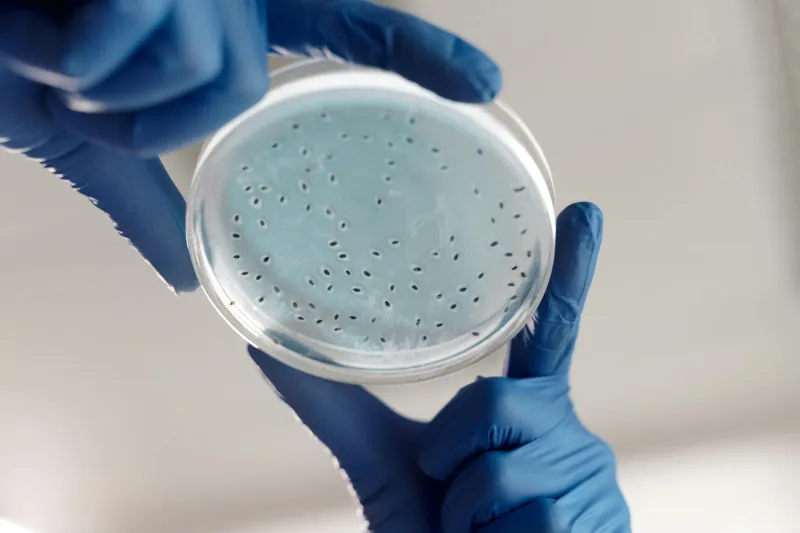
The next time you hear someone blame their stomach problems on stress or spicy food, remember the story of H. pylori. Sometimes the most obvious explanation is wrong, and sometimes proving the truth requires drinking bacteria from a petri dish.
Barry Marshall's cocktail didn't just cure his gastritis — it cured one of medicine's most persistent myths. Not bad for a day's work in an Australian lab.