How a Number That Was Never Tested Became America's Daily Movement Prescription
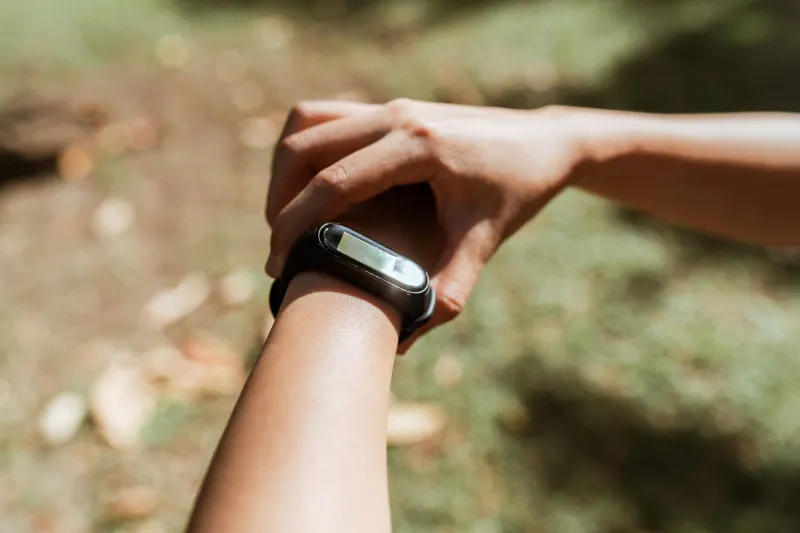
The Number on Your Wrist
If you own a fitness tracker or have the health app on your phone, you've probably seen it: that satisfying ring or bar that fills up when you hit 10,000 steps. Miss it, and there's a faint sense of failure. Hit it, and something feels accomplished — like you've done what you were supposed to do.
But here's a question worth asking: supposed to do according to whom, exactly? Who decided that 10,000 was the right number? Was there a study? A panel of physicians? A public health commission that reviewed the evidence and landed on that figure?
The answer, it turns out, is no. And what's remarkable isn't just where the number came from — it's how thoroughly the American medical and fitness world adopted it anyway.
How Medicine Absorbed a Marketing Number
The origin of 10,000 steps traces back to 1960s Japan and a pedometer called the Manpo-kei — which translates roughly to "10,000 steps meter." It was a product name, not a prescription. The number was chosen because it sounded ambitious and round, not because anyone had measured what step count optimized human health.
What's less talked about is what happened next: how that number made the leap from a Japanese gadget to something that American doctors, public health organizations, and wellness brands began treating as a legitimate clinical target.
The transition was gradual and largely informal. As pedometers became more common in the U.S. during the 1990s and early 2000s, the 10,000-step figure traveled with them. It appeared in walking programs, workplace wellness initiatives, and eventually in media coverage of physical activity guidelines. Nobody formally validated it. Nobody ran a clinical trial comparing 10,000 steps to 8,000 or 12,000 and concluded the former was optimal. It just... became the number.
Health organizations that promote physical activity — including some affiliated with major American medical institutions — began referencing 10,000 steps in their materials, which gave the figure an air of medical endorsement it had never technically earned. The number acquired the shape of a recommendation without ever going through the process that produces one.
What Exercise Scientists Actually Say
When researchers started studying the 10,000-step figure directly, the results were interesting — and somewhat deflating for anyone who'd been chasing that specific target.
A widely cited study published in JAMA Internal Medicine found that among older women, mortality risk dropped significantly as daily steps increased — but the benefits largely plateaued around 7,500 steps. Going from 7,500 to 10,000 didn't produce meaningfully better outcomes. A follow-up study published in JAMA Neurology found similar patterns for cognitive health.
More recent research has pushed the conversation even further. A 2022 study in The Lancet Public Health analyzed data from across multiple countries and found that the optimal step count for reducing mortality risk was closer to 6,000 to 8,000 for older adults and around 8,000 to 10,000 for younger adults — with diminishing returns beyond that range. The message wasn't that 10,000 is wrong exactly, but that it's not a universal magic number, and for many people it's simply more than necessary to achieve meaningful health benefits.
Exercise scientists are also quick to point out that steps are a crude proxy for physical activity. Intensity matters. Two people can both hit 10,000 steps — one by walking briskly for an hour, another by slowly meandering through a mall — and get very different health outcomes. The fixation on a single count can actually distract from more meaningful measures of movement quality.
Wearables Made It Official-Feeling
If the medical establishment gave 10,000 steps its borrowed credibility, the wearable technology industry cemented it as gospel.
When Fitbit launched in 2009 and Apple Watch followed in 2015, both devices defaulted to 10,000 steps as the daily goal. This wasn't based on new research — it was simply the number that already existed in the cultural conversation about daily movement. But when it appeared on a sleek device on your wrist, synced to an app, tracked with precision to the individual step, it started to feel like something official. Like a lab result. Like a threshold your doctor might ask about.
Millions of Americans now structure their afternoons around hitting that number. They pace their living rooms before bed. They take the long way to the bathroom. The 10,000-step target has become one of the most behaviorally influential health metrics in the country — built on a foundation that was never scientifically constructed in the first place.
The Number That Actually Matters
Here's the genuinely useful part of this story: the research doesn't suggest you should stop moving. It suggests almost the opposite — that consistent daily movement is one of the most powerful things you can do for your long-term health, and that even modest increases in activity carry real benefits.
For sedentary Americans, going from 2,000 steps a day to 5,000 produces dramatic improvements in health outcomes. The jump from 5,000 to 7,500 is meaningful. The jump from 7,500 to 10,000 is less so for many people, though it's certainly not harmful.
What exercise researchers consistently emphasize is that the best movement goal is one you'll actually maintain — and that any number you choose should be calibrated to where you're starting from, not borrowed from a 1960s Japanese marketing campaign.
Your fitness tracker isn't lying to you. It's just asking you to hit a number that was never really a prescription. The good news is that moving more — in whatever amount is realistic for your life — is almost certainly doing you real good, regardless of whether you make it to 10,000.