That Daily Step Goal Everyone Obsesses Over? It Started as a Japanese Gadget Commercial
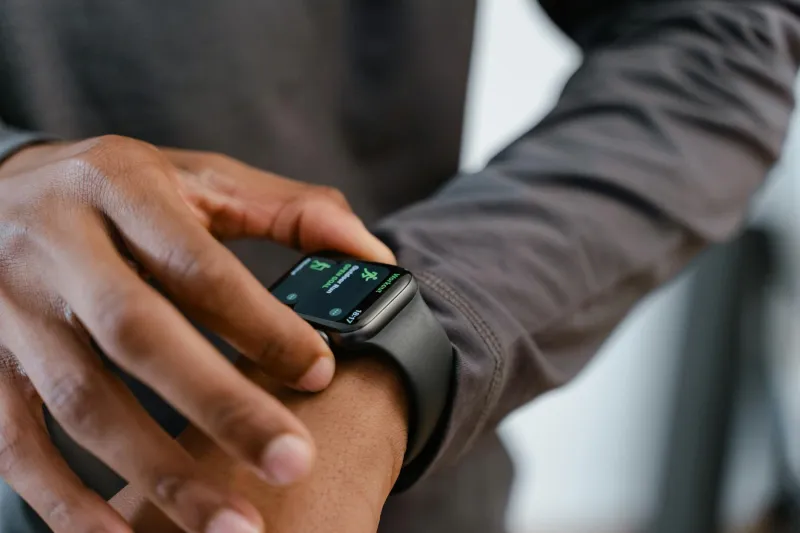
Walk into any gym, check any fitness app, or scroll through health advice online, and you'll see the same number everywhere: 10,000 steps. It's become the gold standard for daily movement, the benchmark that separates the healthy from the lazy, the number that makes or breaks our relationship with our fitness trackers.
But here's what most people don't know: this supposedly science-backed target has nothing to do with science at all.
The Marketing Campaign That Conquered the World
The 10,000-step obsession traces back to 1965 Japan, where a company called Yamasa Clock was preparing to capitalize on the Tokyo Olympics fitness craze. They developed a pedometer and needed a catchy name that would stick in customers' minds.
They called it "Manpo-kei," which translates directly to "10,000 steps meter." The choice wasn't based on extensive cardiovascular research or metabolic studies — it was pure marketing genius. The number 10,000 (万, or "man" in Japanese) is considered lucky in Japanese culture, and it's round enough to feel achievable yet ambitious.
The campaign worked brilliantly. The pedometer became a hit in Japan, and the 10,000-step concept slowly spread across the globe. Decades later, when fitness trackers and smartphone apps needed a default daily goal, they reached for the most familiar number in step-counting history.
What Exercise Scientists Actually Recommend
So what do researchers who actually study human movement say about optimal daily activity? The picture is far more nuanced than any single number can capture.
Dr. I-Min Lee, an epidemiologist at Harvard Medical School, has spent years studying step counts and health outcomes. Her research suggests that health benefits start appearing at much lower numbers — around 4,400 steps per day for older women. The benefits continue increasing up to about 7,500 steps, after which the curve flattens significantly.
For younger, healthier adults, the optimal range varies widely based on individual factors like current fitness level, health conditions, and lifestyle. Some people might see maximum benefits at 6,000 steps, others at 12,000 or more.
The American Heart Association doesn't even use step counts in their official recommendations. Instead, they suggest 150 minutes of moderate aerobic activity per week — which could translate to anywhere from 7,000 to 15,000 steps daily, depending on your pace and what else you're doing.
Why Round Numbers Feel So Right
There's a psychological reason why 10,000 steps felt destined for success, and it goes beyond clever Japanese marketing. Human brains are wired to prefer round, memorable numbers — a phenomenon psychologists call "the round number bias."
We see this everywhere: $99.99 feels much cheaper than $100, even though it's one penny different. Speed limits are set at 55 or 65 mph, not 57 or 63. And health goals feel more legitimate when they're expressed in clean multiples of 1,000.
The 10,000-step target also hits a sweet spot in perceived difficulty. It's high enough to feel meaningful and challenging, but not so high that it seems impossible for the average person. It's the Goldilocks number of fitness goals.
The Real Problem with Step Obsession
The bigger issue isn't that 10,000 steps is wrong — for many people, it's actually a reasonable daily target. The problem is treating any single number as a universal prescription.
Fitness trackers have turned step counting into a game, complete with badges, streaks, and social competition. This can be motivating, but it can also create an all-or-nothing mentality where 9,800 steps feels like failure and 10,001 feels like victory.
Meanwhile, someone who does 30 minutes of swimming, weight lifting, or yoga might barely register 3,000 steps but get far more health benefits than someone who takes a leisurely 10,000-step stroll.
What Actually Matters for Your Health
Instead of fixating on step counts, exercise physiologists suggest focusing on these factors:
Consistency matters more than perfection. Regular moderate activity beats occasional intense bursts.
Include variety. Cardiovascular exercise, strength training, and flexibility work all contribute to health in different ways.
Listen to your body. Some days 15,000 steps feels great; other days 6,000 is plenty.
Consider intensity. A brisk 20-minute walk might do more for your cardiovascular system than an hour of casual meandering.
The Takeaway
The next time your fitness tracker buzzes with disappointment because you're 500 steps short of your "goal," remember that you're being judged by a 60-year-old marketing slogan, not medical advice.
That doesn't mean you should abandon step counting entirely — it can be a useful tool for tracking general activity levels and motivating movement. But it's worth remembering that the most important step is simply taking more steps than you did yesterday, regardless of whether that number has a bunch of zeros at the end.
Your health doesn't know the difference between 9,500 and 10,000 steps. But a Japanese marketing team from 1965 is probably pretty proud that you think it does.